
AOD-9604 Peptide: What It Is, How Researchers Describe It, and Why It Gets Attention

Learn what AOD-9604 is, how it is described in research, and why it appears in peptide discussions. Educational overview only, not for human consumption.
AOD-9604: A Simple Research-Focused Overview
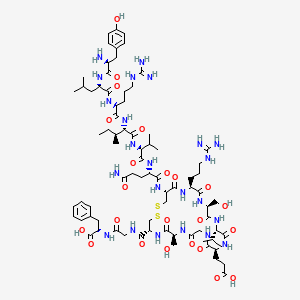
AOD-9604 is a synthetic peptide that is often described as a fragment related to human growth hormone research. In simple terms, you can think of it like taking one small section of a much larger protein and studying whether that smaller section behaves differently on its own. According to PubChem and FDA briefing materials, AOD-9604 is a short peptide derived from the C-terminal region of human growth hormone, with an added tyrosine at the front end of the sequence. FDA materials describe it as a 16-amino-acid peptide with a disulfide bond between two cysteines.
What makes AOD-9604 interesting in research conversations is that it has often been discussed as a peptide that may act differently from full-length human growth hormone. Some preclinical studies reported effects related to fat metabolism pathways without the same kind of receptor interaction expected from the full hormone. One older mouse study, for example, reported that AOD9604 did not interact with the human growth hormone receptor in the same way as full hGH, even while researchers were studying changes in body weight and fat oxidation.
That difference is a big reason the peptide keeps showing up in scientific and commercial discussions. It is not just “growth hormone in smaller form.” Researchers have studied it more like a specific fragment with its own behavior pattern, which is part of why it is important to explain it carefully and not oversimplify what it is.
What Is AOD-9604, Exactly?
At the basic level, AOD-9604 is a synthetic peptide fragment. Peptides are short chains of amino acids, which are the building blocks that also make up proteins. If a full protein is like an entire chapter in a book, a peptide is more like one paragraph that scientists pull out to examine by itself.
PubChem describes AOD9604 as a peptide modeled on a fragment of the human growth hormone molecule. FDA briefing documents add more technical detail, noting that AOD-9604-related substances under discussion include a free-base form and an acetate form, and that peptides like this can present manufacturing and characterization challenges because of impurity risks, aggregation, and stability concerns.
That matters for both science and SEO writing. A lot of low-quality pages talk about peptides in a vague, hyped-up way. A stronger article explains the actual category the molecule belongs to, what its structure means, and where the uncertainty still is.
Why Researchers Have Studied AOD-9604
Most research attention around AOD-9604 has centered on fat metabolism, adipose tissue signaling, and obesity-related research models. Older preclinical work in rodents explored whether the peptide affected lipolysis, body-fat regulation, and fat oxidation. Some review articles also reference a 12-week randomized clinical trial in which one AOD-9604 arm showed more weight loss than placebo, although the effect was not clearly dose-dependent across groups.
A simple way to picture this is to imagine researchers trying to isolate one “message” from a much larger biological instruction manual. Instead of looking at the whole growth hormone molecule, they looked at one fragment to see whether that smaller section might influence a narrower set of metabolic pathways.
That does not mean the science is settled. It means the peptide has been studied in those contexts. There is a big difference between “this was explored in research” and “this is established for routine use.” For a peptide page to be credible, that distinction needs to stay clear.
Is AOD-9604 FDA Approved?
At this time, AOD-9604 should not be described as an FDA-approved drug for routine human use. FDA materials discussing compounded bulk drug substances note that the agency has identified concerns related to AOD-9604, including limited clinical data and reports of serious adverse events where causality was not clear. FDA briefing documents also discuss broader peptide-specific issues such as immunogenic potential, aggregation, peptide-related impurities, and analytical complexity.
That is why careful websites use language like:
- for laboratory research
- for educational reference
- not approved for human consumption
- not intended to diagnose, treat, cure, or prevent disease
Those kinds of statements are not just legal filler. They help separate research discussion from promotional health claims.
How AOD-9604 Is Often Explained in Plain English
AOD-9604 is often described as a research peptide tied to metabolic investigation. A good plain-English explanation would be this:
Full growth hormone is a large biological messenger. AOD-9604 is like one clipped-out section of that messenger that scientists studied to see whether it sends a more specific signal on its own.
That comparison helps because many readers hear “fragment of growth hormone” and assume it works exactly like growth hormone. That is too simplistic. Research literature has treated it as a distinct peptide fragment worth evaluating on its own, especially in relation to adipose biology and metabolic signaling.
What AOD-9604 is and how it is built
At its simplest, AOD-9604 is a short peptide chain (a string of amino acids) designed from a specific “slice” of human growth hormone (hGH). FDA briefing materials describe it as a hexadecapeptide (16 amino acids): a synthetic fragment corresponding to hGH residues 177–191 (15 amino acids) plus an added tyrosine at the N‑terminus, and with two cysteines linked by a disulfide bond (a sulfur-to-sulfur “staple”) between positions 7 and 14.
A helpful way to picture it:
- Imagine a necklace (the amino-acid chain).
- Then imagine a tiny clasp that connects two beads in the middle—creating a loop. That clasp is the disulfide bond, and it can affect shape, stability, and how the molecule behaves in solution.
From the FDA’s briefing document, the molecular formula is reported as C78H123N23O23S2, with molecular weight ~1,815.09 g/mol (for the free base).
AOD-9604 is also discussed in “free base” and “acetate” forms in compounding and chemical listings, with FDA evaluating both AOD-9604 (free base) and AOD-9604 acetate in its advisory-committee briefing context.
Key research findings with study comparison table
What preclinical studies consistently suggest
Across animal obesity models, published studies report signals pointing in a similar direction:
- Reduced body weight gain or reduced fat mass measures in obese animal models.
- Increased markers consistent with lipolysis (for example, higher plasma glycerol in one mouse study).
- A profile that differs from full growth hormone in certain metabolic side effects (e.g., one mouse study notes AOD-9604 did not induce hyperglycemia or reduce insulin secretion in that experiment).
These are meaningful scientific observations, but they are not the same as showing real-world effectiveness in people.
What is known (and not known) from human studies
Publicly accessible, fully detailed human trial publications are limited. In the FDA briefing materials prepared for an advisory committee review, FDA staff note that interpretation of some early human results was limited by minimal publicly available details and that they did not locate a complete publication of methods/results for at least one study described only in abstract-like form.
For the larger Phase 2B obesity trial described in the FDA’s briefing (often referred to as the “OPTIONS” study in those materials), FDA reports:
- Adults with obesity were randomized to oral AOD-9604 (0.25, 0.5, or 1 mg) or placebo, alongside a supervised diet and exercise program for 24 weeks.
- The primary endpoint focused on weight loss after 12 weeks; FDA reports the trial findings indicated no significant difference for that primary endpoint between AOD-9604 and placebo.
- The drug developer publicly ended development for obesity after these results, according to the FDA briefing’s summary of that sequence.
Key studies table
| citation | model (animal/human) | main finding | limitations |
|---|---|---|---|
| Horm Res. 2000 (PMID: 11146367) | Animal (obese Zucker rats) | Oral dosing was associated with >50% reduction in body weight gain vs control in that model; adipose tissue showed increased lipolytic activity; no adverse effect on insulin sensitivity reported via clamp in that study. | Short duration; obesity model may not generalize; “weight gain reduction” is not the same as clinically meaningful weight loss; dosing context differs from typical human use scenarios. |
| Int J Obes. 2001 (PMID: 11673763) | Animal (obese and lean mice; plus in‑vitro receptor tests) | In obese mice, both hGH and AOD-9604 reduced body weight gain and increased fat oxidation/lipolysis markers; AOD-9604 did not compete for the hGH receptor and did not induce cell proliferation in the receptor assay. | Rodent physiology; short treatment window; delivery method and controls differ from typical human settings; in‑vitro receptor tests don’t fully define real-world mechanism. |
| Endocrinology. 2001 (PMID: 11713213) | Animal (obese mice and beta‑3 receptor knockout mice) | Chronic AOD-9604 and hGH reduced body weight/fat in obese mice and increased beta‑3 receptor RNA expression; knockout mice did not show the same long-term weight/lipolysis response, suggesting beta‑3 involvement. | Knockout models are informative but not direct human proof; changes in receptor RNA are not the same as showing a clear clinical mechanism; translation to humans uncertain. |
| Ann Clin Lab Sci. 2015 (PMID: 26275694) | Animal (rabbit osteoarthritis model) | Intra‑articular AOD-9604 injections were associated with improved cartilage outcomes in this rabbit OA model; AOD-9604 + hyaluronic acid outperformed either alone in that experiment. | Local joint injection in rabbits is not evidence for human benefit; endpoints are model-specific; does not address obesity/metabolic outcomes. |
| Drug Test Anal. 2015 (PMID: 25208511) | Human-related (anti-doping lab work; not an efficacy trial) | Defines AOD-9604 as hGH 177–191 with an extra N‑terminal tyrosine; identifies metabolites and detection strategy; notes it is banned by the World Anti‑Doping Agency. | Not designed to test health outcomes or benefits; focused on detection/metabolism, not effectiveness. |
| FDA PCAC Briefing (Dec 2024) | Human (regulatory summary of obesity trials) | FDA summarizes that a large Phase 2B obesity trial did not show a significant difference at the primary 12‑week weight-loss endpoint and discusses limited publicly available detail for some studies. | Secondary reporting rather than full peer‑reviewed trial publication; constrained by what was publicly available to FDA and by what was submitted in nominations. |
Safety and regulatory context
FDA status and compounding risk framing
FDA briefing materials state that AOD-9604 is not part of an FDA-approved drug and note the absence of a USP/NF monograph for AOD-9604 (free base) or its acetate, in that context.
FDA also maintains a page listing bulk drug substances that may present significant safety risks in compounding. On that page, FDA states that compounded drugs containing AOD-9604 may pose significant risk for immunogenicity for certain routes of administration, and notes complexities related to peptide impurities and API characterization, along with limited safety-related information.
In its advisory-committee briefing, FDA’s conclusion/recommendation section emphasizes multiple concerns (characterization gaps, lack of strong evidence of effectiveness for obesity, and insufficient safety information) as reasons weighing against placing AOD-9604 (free base) or AOD-9604 acetate on the 503A Bulks List.
Why peptides raise special safety questions
Peptides are not like simple small molecules. FDA briefing materials describe higher sensitivity to factors like formulation and manufacturing conditions, with risks such as aggregation and degradation—issues that can matter both for product performance and for immunogenicity risk.
This is one reason regulators pay close attention to:
- impurity profiles,
- aggregate detection,
- and consistent characterization methods.
Reported adverse events and uncertainty about causality
FDA’s briefing document summarizes that serious adverse events were reported in study populations (including diarrhea, chest tightness, and various cancers in oral studies) but also notes insufficient information to assess relatedness in those reports; it also mentions adverse events reported as possibly related in IV studies (e.g., chest tightness and euphoria).
Separately, one safety summary article (published outside PubMed-indexed major journals) reported no withdrawals or serious adverse events related to AOD-9604 across the trials it summarized, and no anti‑AOD antibodies in the subset analyzed—highlighting how summaries can vary depending on what data are included and how causality is assessed.
Sports and anti-doping context
AOD-9604 appears in anti-doping literature because it has been framed as a fragment intended to mimic lipolytic effects without certain diabetogenic effects, and a published anti-doping lab study states it is banned by the World Anti-Doping Agency.
FAQ
What is AOD-9604?
AOD-9604 is a synthetic peptide derived from the C‑terminal region of human growth hormone: hGH residues 177–191 plus an added N‑terminal tyrosine, with a disulfide bond linking two cysteines (forming a loop).
Is AOD-9604 the same as “HGH fragment 176–191”?
Not exactly. AOD-9604 is commonly described in authoritative summaries as tied to the 177–191 region (with an added tyrosine). Different sources sometimes describe neighboring fragments, which is one reason it’s important to verify identity via reputable references (FDA briefing, PubMed-indexed papers, and chemical registries).
What benefits are proposed in research?
Most discussion centers on fat metabolism: animal studies report reduced weight gain and higher fat oxidation/lipolysis markers in obese models. A smaller, separate research track includes a rabbit osteoarthritis model where intra‑articular injections were associated with improved cartilage outcomes (especially when combined with hyaluronic acid).
Does it increase IGF‑1 or act like full growth hormone?
A key mouse study reported AOD-9604 did not bind the growth hormone receptor in its in‑vitro assay and did not induce receptor-mediated cell proliferation in that system.
In human trial summaries, some reports state no measurable IGF‑1 increases; however, regulators still emphasize limitations in available evidence and characterization when weighing safety and effectiveness.
Is it FDA-approved or “legal” as a drug?
AOD-9604 is not presented in FDA briefing materials as an FDA‑approved drug ingredient, and FDA lists it among bulk substances that may present significant safety risks when used in compounding, noting limited safety information and potential immunogenicity/impurity concerns.
(For any legal/regulatory interpretation in specific settings, rely on official FDA updates and qualified legal counsel; this article is not legal advice.)
Why do people mention AOD-9604 in sports?
Because an anti-doping laboratory paper describes it as a growth‑hormone fragment and states it is banned by WADA; the research focus there is detection and metabolism, not health benefits.
